
Plumbing in Pasadena's Older Homes: Galvanized Pipes, Cast-Iron Drains, and What to Fix First
Los Angeles Plumbing Pros Blog — 2 Nov 2026
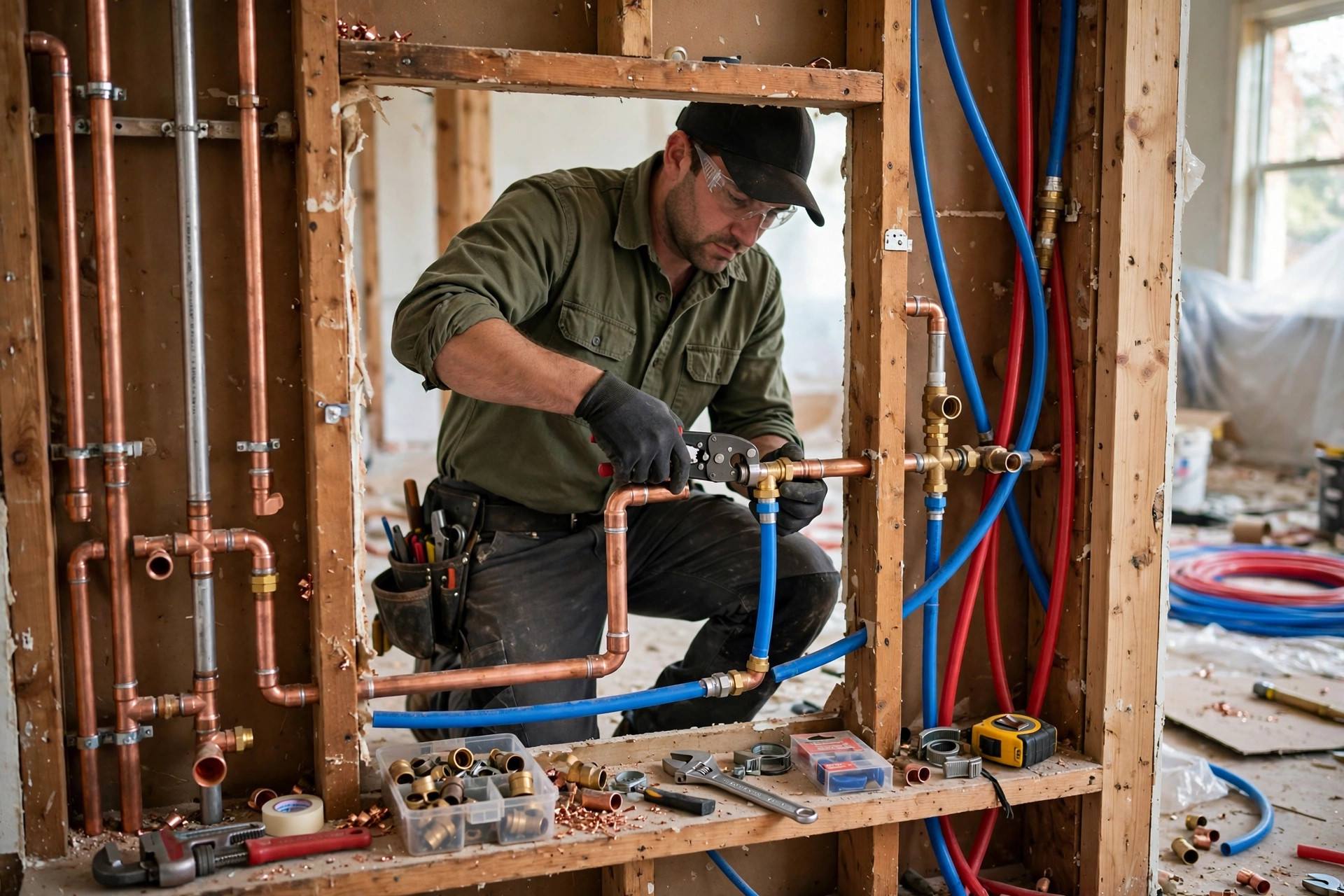
Pasadena keeps its old houses in a way few Los Angeles-area cities do. Craftsman bungalows with deep porches, Spanish-style homes with thick plaster walls, and post-war houses that have been extended room by room all sit on the same streets, and their plumbing tells the same layered story. A Craftsman that looks beautifully kept from the sidewalk can still be running water through supply lines installed generations ago, draining through narrowing cast iron, and sending waste out through a clay lateral that Pasadena's mature street trees have been exploring for just as long. That does not make it a bad home. It means its plumbing must be judged by age and materials, not by paint and remodels.
This post explains what actually fails first in Pasadena's older homes, how to tell a cosmetic problem from a system problem, and how to set priorities when everything cannot be fixed at once. The goal is not to frighten anyone into a whole-house project. It is to help a homeowner spend first on the problem that can cause damage, and plan the rest in an order that makes sense.
Why Pasadena's older homes fail differently
Age alone does not decide how a Pasadena plumbing system behaves. What matters is which materials were used in each era, and a pre-war Craftsman in Bungalow Heaven may have had its kitchen moved, a bathroom added and a laundry relocated, each time with the pipe available at that date. The result follows the house's own history: copper in a remodelled bathroom, galvanized steel in the original wing, a drain that changes material halfway to the street. Every joint between those materials is a place where flow can slow and corrosion can start, and the only way to know the mix is to look at the exposed runs and measure flow at several fixtures.
Pasadena's setting adds its own pressures. The city sits against the San Gabriel foothills, so some streets climb enough that water pressure varies noticeably from one end of a run to the other, and hillside and foothill properties can see higher static pressure than flat-lot homes. Mature street trees, which are one of the city's great assets, send roots toward the steady moisture in a sewer lateral, and older clay joints give those roots an easy entry point. Hard water adds scale inside heaters and fixtures, and in a foothill home it makes a narrowed galvanized line feel worse than it is. In a typical older Pasadena home, two or three of these factors work on the same pipe at once.
Galvanized supply lines: the slow narrowing problem
Galvanized steel was the standard supply material for much of the mid-twentieth century, and many Pasadena homes built from the late 1940s through the 1960s - the Hastings Ranch tracts and the post-war streets east of the Arroyo among them - still carry some of it. The pipe was coated with zinc when new, and for a time it performed well in Pasadena's foothill streets too. Over decades the zinc wears away and the steel underneath corrodes from the inside, narrowing the line layer by layer until a shower that once ran strong delivers a thin stream, especially when a second tap opens or the washing machine fills.
The signs of galvanized trouble in a Pasadena home are easy to misread. Low pressure at a single fixture usually points to that fixture, but low pressure across several fixtures, or pressure that drops sharply when another tap runs, points to the supply system. Rust-coloured water after the house has sat unused, or after work on a Pasadena street main, is another warning, because it shows loose corrosion inside the line. A metallic taste, and aerators and cartridges that keep clogging with grit, can mean the same thing: the grit is coming from the pipe, not the fixture.
Galvanized lines complicate every other decision in a Pasadena home. A water softener reduces new scale but will not reverse rust and narrowing already inside the pipe, and a new water heater cannot push more water through a narrowed supply than the pipe allows. That is why a pressure and flow check at several points in the house matters before money is spent on equipment at the end of the line - the heater, the softener and the fixtures all depend on the pipe feeding them.
Cast-iron drains and clay sewer laterals
Cast iron and clay fail differently from galvanized: they roughen, crack and invite roots. Cast-iron drain pipe, common in the older Pasadena homes around Bungalow Heaven and the central neighbourhoods, corrodes and scales on the inside, so waste moves more slowly and grease, paper and scale catch on the rough surface. The first sign is usually a drain that clears with a plunger or a cable and then slows again within weeks, or several drains that gurgle when a toilet flushes or the tub drains. When a drain needs clearing again and again, the pipe itself has changed - the rough interior, not the blockage, is what keeps catching waste.
Outside the house, the lateral to the street sewer is often clay in older Pasadena properties, laid in short sections with joints that shift as foothill soil moves and oak and sycamore roots press in. A root can enter a hairline joint, grow into a mat, and catch everything that passes. Hydro jetting can clear that mat, and a sewer camera inspection can show whether the pipe is still sound, whether a foothill-soil shift has offset or bellied a section, and whether a spot repair, lining or replacement is the right next step. Clearing without looking is guesswork; a camera check turns a repeat blockage into a plan with a named cause.
Raised foundations: where Pasadena leaks show up
Many Pasadena homes sit on raised foundations rather than on a concrete slab, and that changes how leaks behave and how they are found. A supply leak under a raised house may show as damp soil in the crawlspace, a musty smell, a soft spot in a floor, or a water bill that climbs without any visible puddle. A drain leak in the same space can go unnoticed for longer, because it does not always reach a living area. A raised foundation gives the technician something a slab never does: room to see and reach the pipe, so a leak can be found without cutting concrete. The trade-off is that a slow leak can work quietly on framing, insulation and subflooring for weeks before anyone looks underneath.
That is why a crawlspace check belongs in any older-home assessment, even when the complaint is about a single fixture. Standing water, stained joists, dripping joints, and the condition of older drain sections all tell a story that the rooms above cannot. In slab-built additions, the same leak would behave differently, often as a warm floor spot, a damp patch, or a sound of running water when nothing is on, and it would need a different kind of detection. A house with both construction types, which is common after an addition, needs both kinds of thinking, and the inspection should say clearly which part of the house is which.
Water heaters, seismic straps, and hard water in older homes
Water heaters in older Pasadena homes fail for a mix of local reasons. Pasadena's hard water coats the inside of tanks and tankless heat exchangers with scale, so the heater burns longer for the same hot water and starts to rumble as the scale thickens. A heater fed by an old galvanized supply can also look worse than it is, because a narrowed pipe starves it of flow and mimics a failing unit. And a heater in a garage or utility space that has never had its straps, venting, and relief discharge checked against current practice is a safety question as well as a comfort question, in a city where earthquakes are a real planning factor rather than a remote one.
A Pasadena heater replacement should start with three separate questions, not one: has the heater itself failed, is the water feeding it hard and scaled, or is the pipe delivering the water narrowed? Flushing or descaling settles the water question, and a flow check at several fixtures settles the pipe question. Only with those two answers can a repair-versus-replacement decision be made honestly. A young heater whose only problem is cleanable scale is a different case from a tank that is leaking, and age alone should not decide either one. Seismic straps and bracing should be checked whenever a heater is serviced or replaced, not treated as an afterthought, because a heater that tips in a quake is a gas and water problem at once.
Older bathrooms, kitchens, and fixtures
In an older Pasadena bathroom or kitchen, the fixtures usually fail before the pipes do, and that misleads in both directions. A toilet that runs, rocks or leaks at the base may need only a fill valve, a flapper, or a new wax ring and a proper reseat. A dripping faucet may need only a cartridge. But when that same bathroom also has low flow, discoloured water and a drain that slows every few months, the fixture is the symptom and the system is the cause. New fixtures on failing pipe give a new look and the same old performance, and they can hide the system problem until it becomes a leak.
The rule that saves Pasadena homeowners money is simple: fix the fixture when the problem stays at the fixture, and step back to the system when problems appear in more than one room, or when the same fixture fails repeatedly. A kitchen remodel is when this matters most. Opening walls and floors for new cabinets is the cheapest time to replace the pipe behind them, and the most expensive time to discover, after the tile is set, that the old supply or drain behind the new kitchen was already at the end of its life. If a remodel is planned, the plumbing assessment comes before the finishes are chosen, not after.
Diagnosis steps: what a proper older-home check looks like
A proper Pasadena older-home check follows an order, and a homeowner can tell a lot from whether that order is followed. It starts with the complaint and the history: when the problem started, which rooms it affects, whether it changes with time of day, with foothill rain, or with other fixtures running, and what has already been repaired. Then come simple measurements: static and running pressure, flow at several fixtures, and a hardness check if scale is suspected. Those readings separate a fixture fault from a system fault faster than any guess, and they give a baseline later work can be measured against. From there the check goes to the pipe itself: a camera inspection of the lateral, a look under the house at the crawlspace runs, and a check of visible supply material wherever it is exposed. A written summary should name the materials found, the condition of each run, and the problems ranked by risk - active leaks and sewer backups first, then flow and water-quality problems, then efficiency. A report that lists only one repair, without saying what else was seen, has not done the job for an older Pasadena home.
From there, the check goes to the pipe itself: a camera inspection of the lateral, a look under the house at the crawlspace runs, and a check of visible supply material wherever it is exposed. A written summary should name the materials found, the condition of each run, and the problems ranked by risk: active leaks and sewer backups first, then flow and water-quality problems, then efficiency. A report that lists only one repair, without saying what else was seen, has not done the job for an older home.
What to fix first when everything cannot be fixed at once
Almost no older Pasadena home needs everything at once, and a good plan says so plainly. First come the problems that can cause damage or a health risk: an active leak, a sewer backup, a gas concern, or a water heater safety issue. Those should not wait for a remodel. Second come the whole-house problems: a narrowed main supply that leaves every shower weak, or a lateral that backs up every few months. Third come the improvements that make a good system better: a softener, a filtration choice, or fixture upgrades in an otherwise sound bathroom.
A phased plan works when each phase leaves the house better and nothing has to be undone by the next one. In Pasadena that usually means the lateral first: replacing a failed lateral before repiping a bathroom that drains into it is sensible sequencing, while repiping one bathroom and leaving a failing main supply in place is not, because the new bathroom will still starve for water. The plan should name each phase, what it fixes, and what it leaves for later, so the homeowner chooses the sequence instead of discovering it one emergency at a time.
What to check before calling Los Angeles Plumbing Pros
A few notes before a visit make it far more useful, and Pasadena homes reward specifics. Write down which fixtures are affected, whether the problem is pressure, drainage, discolouration, noise or a visible leak, and when each symptom first appeared. Note the house's age if you know it, any remodel or addition - a moved kitchen or an added bathroom changes the pipe map - and any previous plumbing work, even a drain clearing. If the water bill has risen, have a recent bill handy, and say exactly where a floor feels warm, a crawlspace smells musty, or dampness shows at a foundation vent. The clearer the history, the less time is spent rediscovering it.
Prevention and maintenance in an older Pasadena home
Older Pasadena plumbing rewards steady, small habits more than dramatic interventions. Keep grease, wipes and heavy paper out of drains, because a rough cast-iron interior catches what a smooth new pipe would pass. Flush a tank heater or descale a tankless unit on the schedule the water hardness requires, rather than waiting for noise or lost capacity. Check under sinks and around toilets for slow drips, look under the house after a wet winter - foothill runoff is when a crawlspace leak shows itself - and keep a simple record of pressure readings, camera findings and repairs, so the next technician starts from evidence rather than from scratch. A single page of notes, kept with the house, is worth more than a perfect memory. Trees deserve the same steady attention. A lateral under a mature Pasadena street tree is not a reason to remove the tree, but it is a reason to know the lateral's condition and clear roots on a schedule set by what the camera shows, not by a calendar alone. If roots return quickly, the joint or section that lets them in needs a repair decision, not another clearing. After any major work, ask for a written summary: what was replaced, what material was used, what was left in place, and what should be checked next.
Trees deserve the same steady attention. A lateral under a mature street tree is not a reason to remove a tree, but it is a reason to know the lateral's condition and clear roots on a schedule set by what the camera shows, not by a calendar alone. If roots return quickly, the joint or section that lets them in needs a repair decision, not another clearing. After any major work, ask for a written summary: what was replaced, what material was used, what was left in place, and what should be checked next.
Neighbourhood notes across Pasadena
Pasadena is not one housing stock, and a street-by-street view matters more than a city-wide label. Bungalow Heaven and the older central neighbourhoods hold many early-twentieth-century homes where original materials, additions, and later updates sit side by side. Linda Vista and San Rafael bring hillside, larger-lot conditions, where pressure, access, and longer laterals change a job. Hastings Ranch and the post-war tracts to the east carry more mid-century galvanized and cast-iron work. East Pasadena mixes older homes with newer construction, so two houses on one block can need completely different plans. The common thread is the house's own history, read from its pipes, not its Pasadena postcode.
Frequently asked questions
How do I know if my Pasadena home still has galvanized pipes?
Look for grey, threaded steel pipe at an exposed run, such as in a garage or utility area, and watch for the symptoms that go with it: low flow at several fixtures, pressure that drops when another tap opens, and rust-coloured water after the house has sat unused. A technician can confirm the material and measure flow, which together say more than appearance alone.
Is a sewer camera inspection worth it for an older Pasadena home?
Yes. In a Pasadena home the camera is worth it whenever drains back up repeatedly, several drains are slow at once, or a lateral repair is being considered. In a Pasadena home the camera usually finds one of four things: roots at a clay joint, a broken or offset section, a belly that holds water, or a pipe that has simply aged out. That distinction decides whether clearing, a spot repair or a replacement is the right spend.
Should I repipe the whole house or just the worst bathroom?
It depends on how much galvanized pipe remains and how poor flow is throughout the house. If one run is bad and the rest of the system is sound, a targeted replacement can be right. If galvanized pipe is found in most of the house and flow is poor everywhere, a phased or whole-house repiping avoids paying twice for the same walls to be opened.
Why does my Pasadena drain keep blocking after it was just cleared?
A clear takes out the blockage, not the cause behind it. In a Pasadena home the cause is usually a rough cast-iron interior, a root mat at a clay joint, or a bellied section - and any of the three will catch waste again within weeks.
Does a water softener fix low pressure from old pipes in a Pasadena home?
No. A softener reduces new mineral scale, which helps protect heaters and fixtures, but it does not reverse the rust and narrowing already inside a Pasadena home's galvanized pipe. Flow comes back only when the narrowed pipe is replaced.
What should I do first if I find a leak under my raised foundation?
Stop the water if you can do so safely, note where the dampness or dripping is in the crawlspace, and avoid using the affected fixtures until the leak is checked. A Pasadena crawlspace leak is found by looking underneath, not by waiting for a puddle in a room.
Related services
Whole-House Repiping in Los Angeles | Sewer Camera Inspection in Los Angeles | Sewer Line Repair in Los Angeles | Plumber in Pasadena, CA
Call Los Angeles Plumbing Pros
If your Pasadena home has low flow in several rooms, drains that keep slowing, discoloured water, or a damp spot under the house, describe which rooms are affected, when the problem started, and what has already been tried. A technician will talk through the next step, starting with the crawlspace and the lateral.