
Plumber in Glendale, CA
Very hard water, hillside pressure up to 150 PSI and pre-1960 galvanized - Glendale is the hardest city on pipes in this area.
About plumbing in Glendale, CA
Glendale is a very hard water city, over 12 grains per gallon, where scale narrows lines and kills heaters in three to five years, and where pre-1960 homes still run on original galvanized.
Neighbourhoods covered
Adams Hill, Sparr Heights, Tropico, Grandview, Verdugo Woodlands, Oakmont, Whiting Woods, Rancho San Rafael, San Rafael Hills
Housing
Pre-1960 bungalows, Verdugo foothill homes, and newer hillside builds.
Pipe materials
Original galvanized in pre-1960 homes, cast-iron and clay laterals, copper in later work.
Terrain and pressure
Verdugo foothills and San Rafael Hills, where pressure can reach 100 to 150 PSI and a pressure-reducing valve is required over 80 PSI.
Common jobs here
Repiping, water softeners, water-heater work, sewer camera and root work, and pressure-valve checks.
Very hard water is the defining Glendale factor, paired with hillside pressure and mature-tree roots in clay laterals.
What fails first in Glendale homes
Hard water is the defining Glendale factor. At over 12 grains per gallon the water is classed as very hard, and scale narrows supply lines and builds inside water heaters until a tank that should last a decade fails in three to five years. Scale insulates the heating elements, causes rumbling and popping, and leaves the heater heating a layer of mineral instead of water.
The second pattern is pressure. Verdugo foothill and San Rafael Hills streets can see 100 to 150 PSI, and a pressure-reducing valve is required over 80 PSI. Without one, high pressure wears fixture seals and heater connections. Pre-1960 bungalows in Adams Hill, Tropico and Rossmoyne still run on original galvanized, and mature-tree roots in the clay laterals complete the pattern - scale, pressure and roots, all in the same home.
What to check first in a Glendale home
Put a gauge on a hose bib first - it takes a minute and tells you whether a pressure-reducing valve is needed or has failed. Then check the heater: sediment and the anode rod decide whether it is a flush, a repair or a replacement. Look at the age of the supply lines, because pre-1960 galvanized narrowed by scale is a system problem, not a fixture problem. Camera the clay laterals if drains back up, since mature-tree roots are the usual cause here.
Frequently asked questions
Why do Glendale water heaters fail early?
Very hard water leaves scale in tanks within three to five years, insulating elements and shortening life. A softener and regular flushing help, but they do not undo a heater that is already scaled and leaking.
Does a water softener stop Glendale scale?
A softener slows new scale. It does not undo scale already in a heater or in narrowed lines. A flushed heater lasts longer, but a heater that is already scaled and leaking is still a replacement case.
What pressure should a Glendale home run at?
Over 80 PSI needs a pressure-reducing valve. Hillside streets often run well above that, and the extra pressure wears out fixture seals and heater connections. A gauge reading is the first check, and a failed valve is a common find in older Glendale homes.
Services for this city
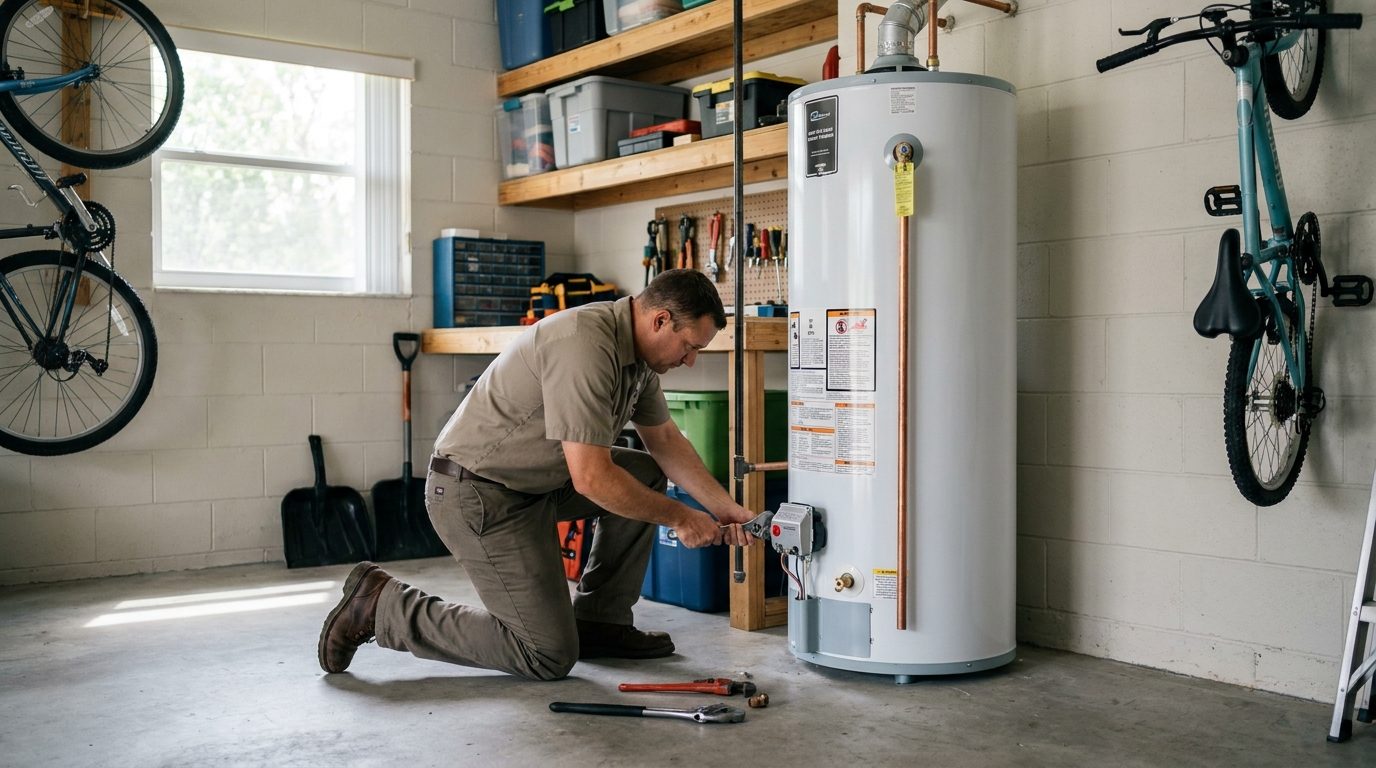
Water Softener Installation
Softeners for very hard water over 12 grains per gallon - the scale that kills Glendale heaters.
Water Heater Repair
Heaters that scale out in three to five years - repaired or replaced on the evidence.
Tankless Water Heater Installation
Tankless units sized to the home, with hard-water protection built into the install.
Call now
If the heater rumbles or pressure is low everywhere, the cause is usually scale or old galvanized - not one fixture. Call, say how old the heater is and whether the pressure dropped gradually, and a technician will talk through the next step.